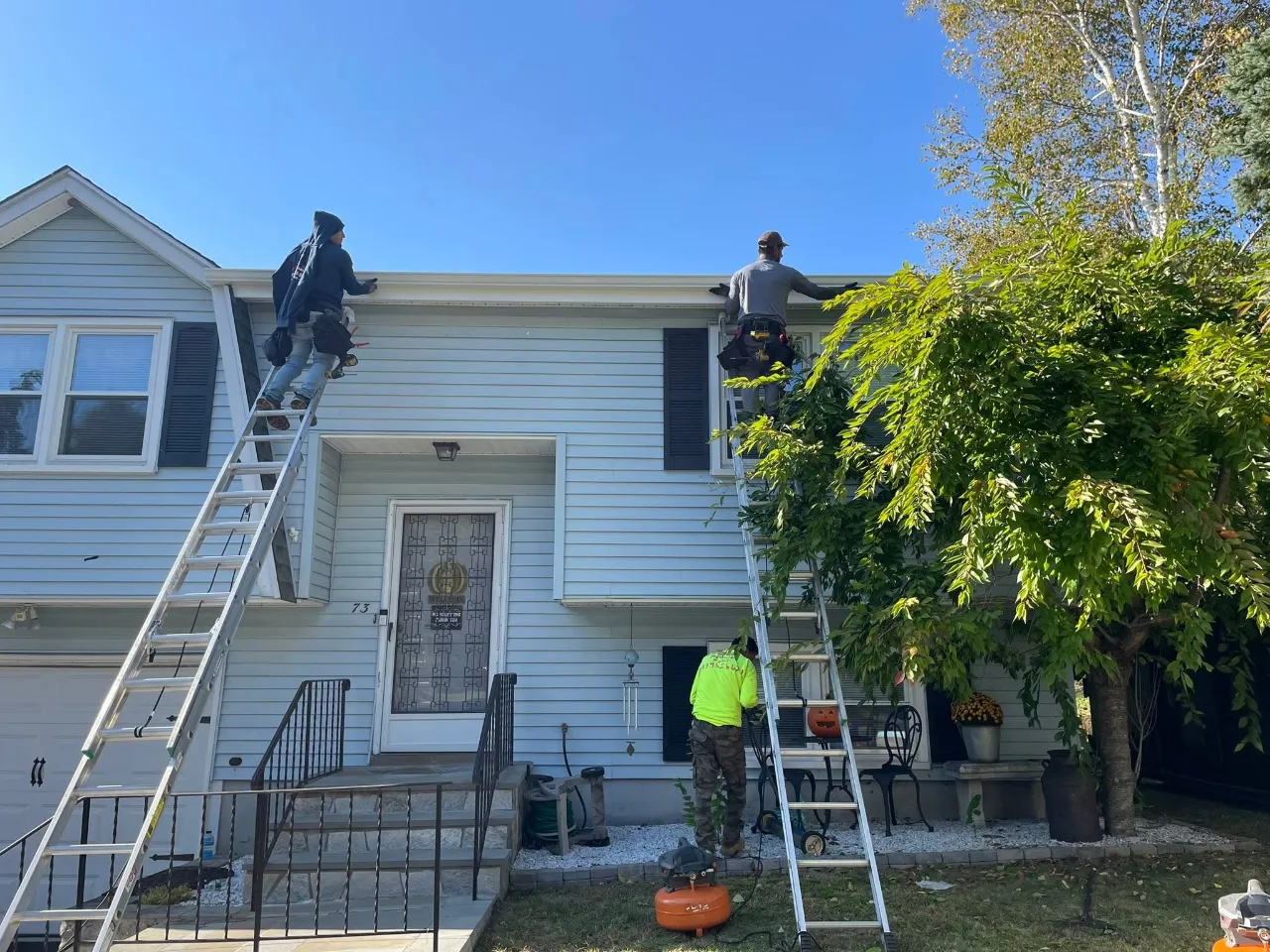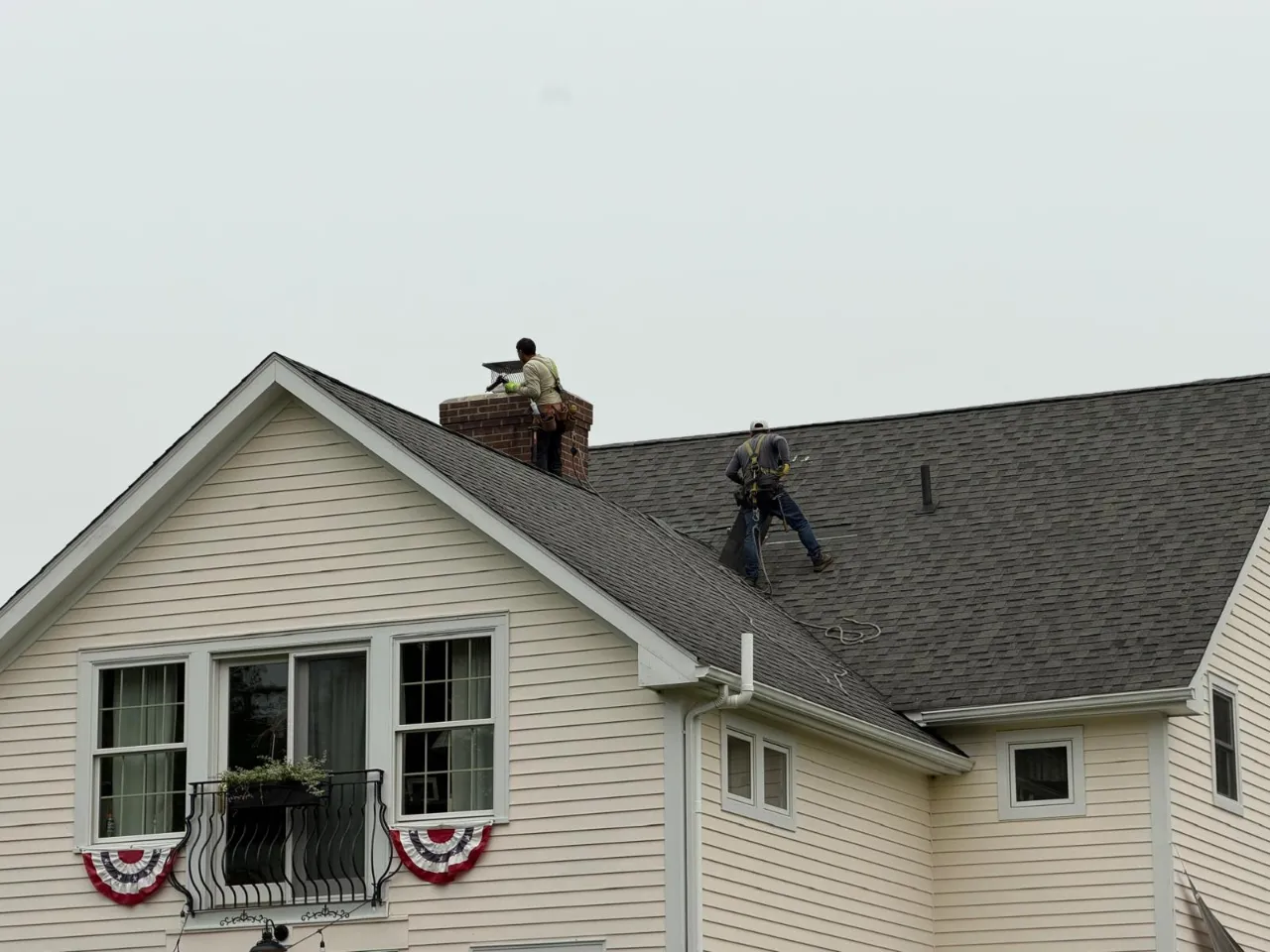
If you have watched a ridge of ice build along the edge of your roof every January, you already know the routine. The icicles look harmless at first, then a brown ring shows up on a bedroom ceiling and it stops being decorative. Ice dams in Connecticut are one of the most common winter callbacks in the roofing trade, and almost every homeowner who gets one gets it again the next year, in the same spot, on the same side of the house. That repetition is the clue. An ice dam is not bad luck and it is not caused by the snow. It is caused by heat leaving your house where it should not, melting the snow above it, and letting that water refreeze somewhere colder. Understanding that sequence is the difference between paying for the same ceiling repair every spring and fixing the thing that causes it. The good news is that the fix is usually not a new roof.
What an Ice Dam Actually Is
Snow sits on a roof like a blanket. If the surface under it stays cold, nothing happens and the snow melts off slowly in the sun. The problem starts when part of the roof is warm. Heat escaping from the living space into the attic warms the underside of the deck, the snow directly above melts, and that water runs down toward the eave. The eave hangs past the exterior wall, so there is no heated space under it. It stays cold. The water reaches that section, stops, and freezes. Repeat that for a few days and you get a ridge of ice thick enough to hold standing water behind it, and standing water finds its way under the shingles.
Why It Keeps Happening to the Same House
Ice dams show up on the same roofs year after year because the cause is built into the house. Recessed lights, attic hatches, bath fans vented into the attic instead of outside, missing insulation over an addition, and ductwork running through unconditioned space all leak heat upward. Older Connecticut homes are especially prone to it, since many were built with almost no attic insulation and no ventilation at all. A new roof does not change any of that. Homeowners often replace shingles hoping the ice stops, then get the same dam the following winter, because the shingles were never the problem. The heat was, and it still is.
What Does Not Fix It
Chipping ice off with a hammer damages the shingles and the gutter, and sometimes the person on the ladder. Salt tablets melt a channel through one spot and do nothing about the rest of the run. Heat cables are the most common band aid sold in Connecticut, and they do help water get past a dam, but they run on your electric bill all winter and they hide the heat loss instead of correcting it. None of those approaches touch the actual cause. They manage the symptom for one more season, which is exactly why the ice returns the same week every year and the ceiling stains again.
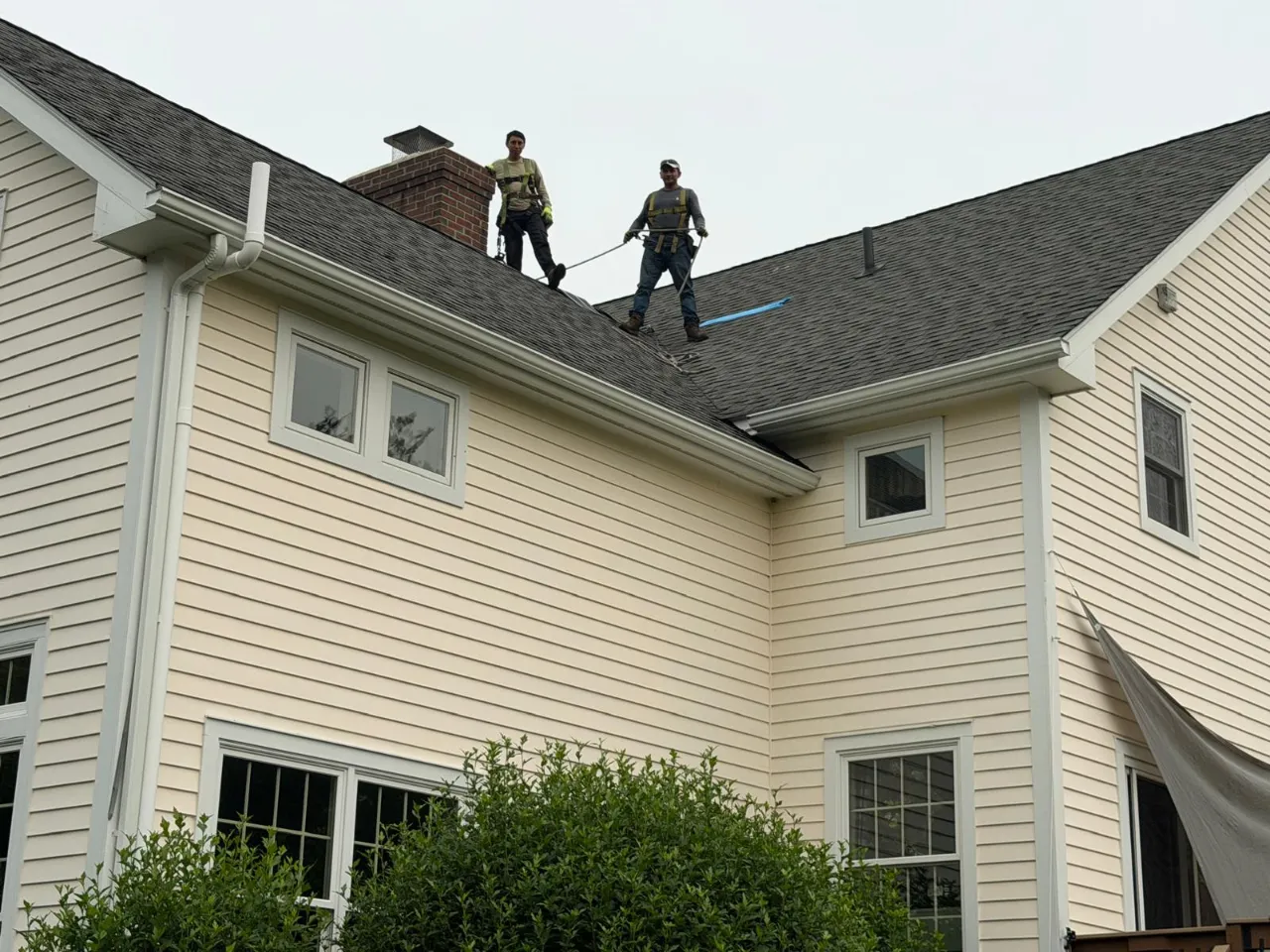
What Actually Fixes It
The permanent fix is almost always air sealing and ventilation. Sealing the gaps where warm air enters the attic keeps the roof deck cold. Adding insulation to the right depth slows whatever heat gets past the seal. Balanced intake and exhaust ventilation moves the rest out before it can warm the deck. When a roof is being replaced anyway, that is the moment to add ice and water shield along the eaves and in the valleys. It does not prevent a dam from forming, but it keeps the water a dam holds from reaching the decking. Done together, those steps end the cycle instead of managing it.